Introduction
Project Name:
IP Protection & Ownership Verification Layer for Builtattic
Name of the organization or individual submitting the proposal:
Akshat Chaturvedi, Founder, Builtattic Pvt. Ltd.

Describe your project
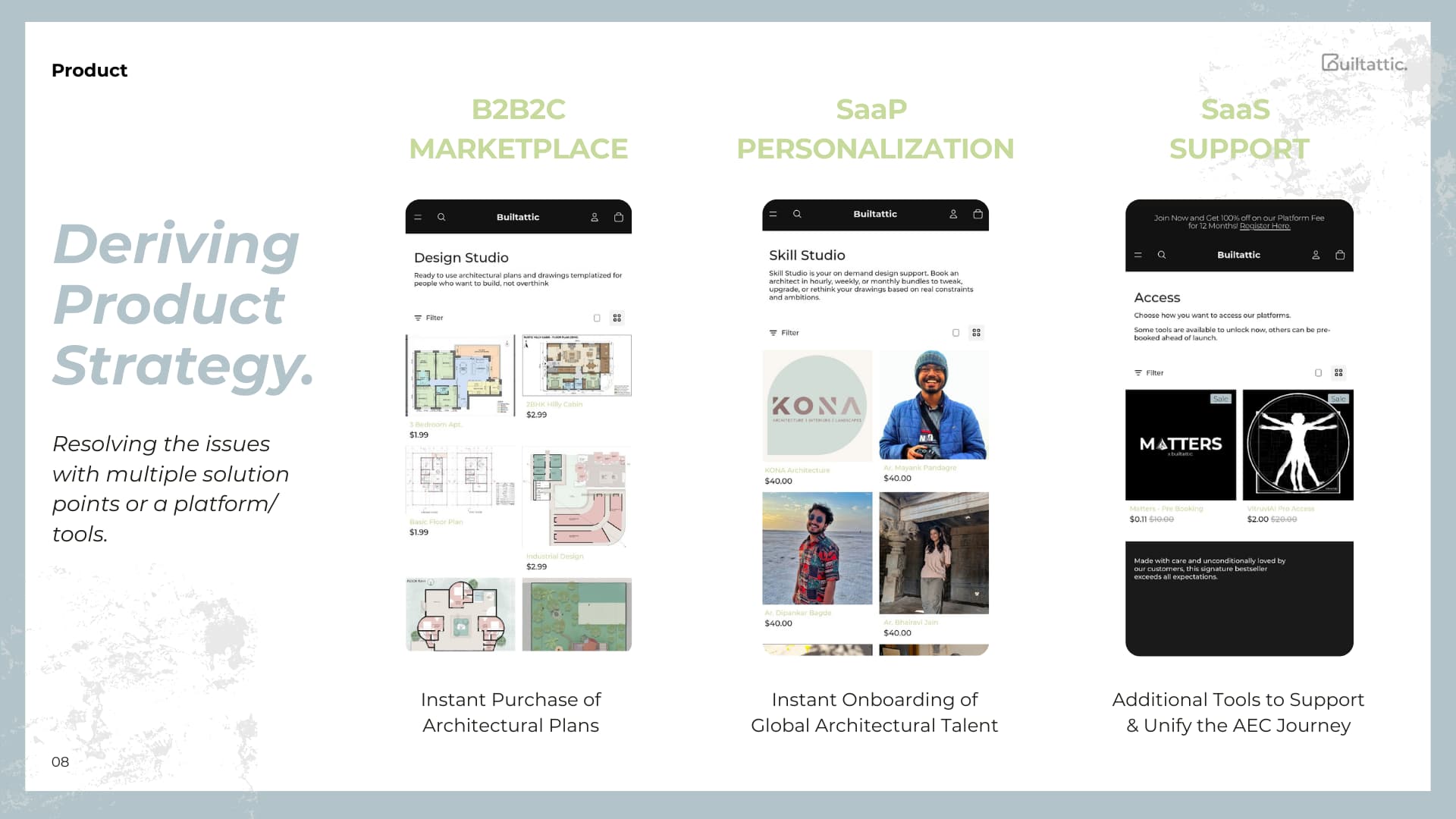
Builtattic is a global architecture marketplace that enables architects to commercialize templatized building designs while preserving ownership and control of their most valuable intellectual property: working drawings.
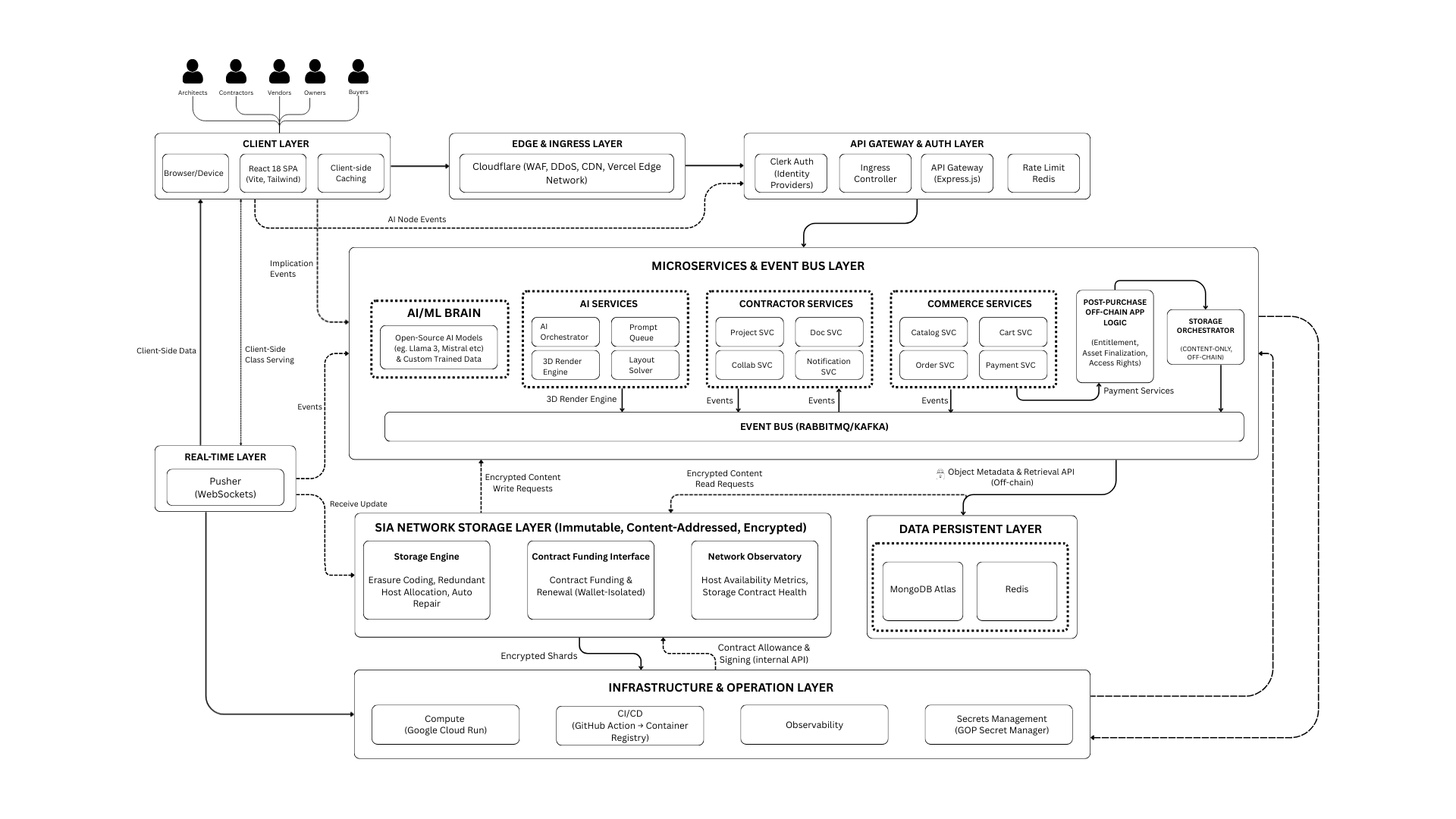
The platform separates public discovery from private delivery. Only low-risk assets (renders, summaries, conceptual plans) are publicly visible. Working drawings are stored using decentralized storage, encrypted, and released only after purchase through a permissioned, buyer-specific delivery flow with verifiable access records.
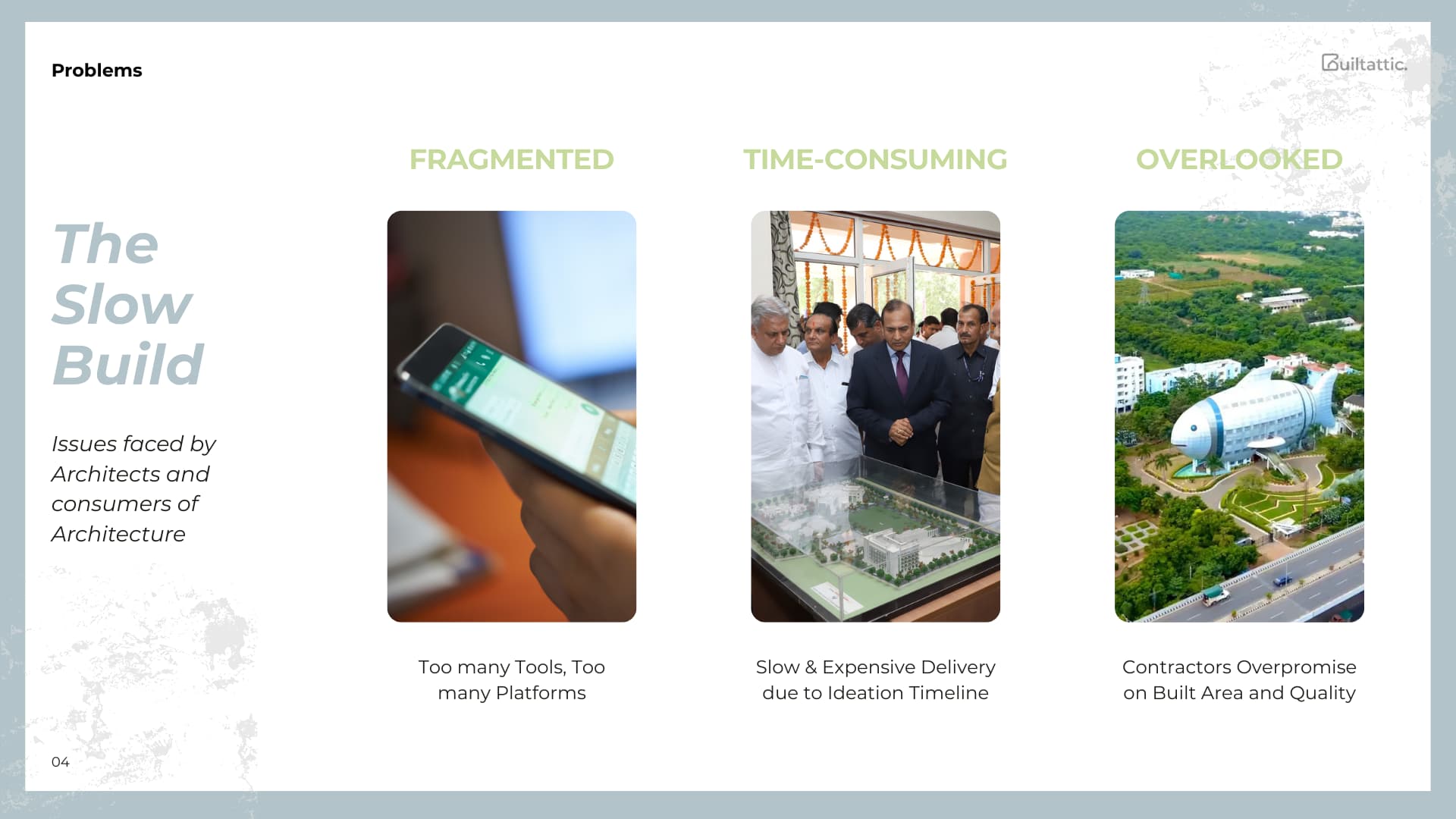
An earlier version of this idea was submitted in the past with limited clarity and maturity. Since then, the founder and core technical team intentionally paused the project to gain deeper professional, production-grade experience across engineering, operations, and product execution. A few months ago, the project was restarted from first principles with tighter scope, clearer milestones, and a storage-centric execution plan.
To date, the team has built and tested working prototypes using Filecoin and Polygon, validating demand for IP-protected delivery. This proposal represents a more focused, execution-ready version of the same idea, aligned closely with Sia’s strengths in user-owned, permissioned data storage.
Who benefits from your project?
Primary beneficiaries are independent architects, small and mid-sized firms, architecture students, and boutique studios who currently avoid publishing build-ready designs online due to IP theft.
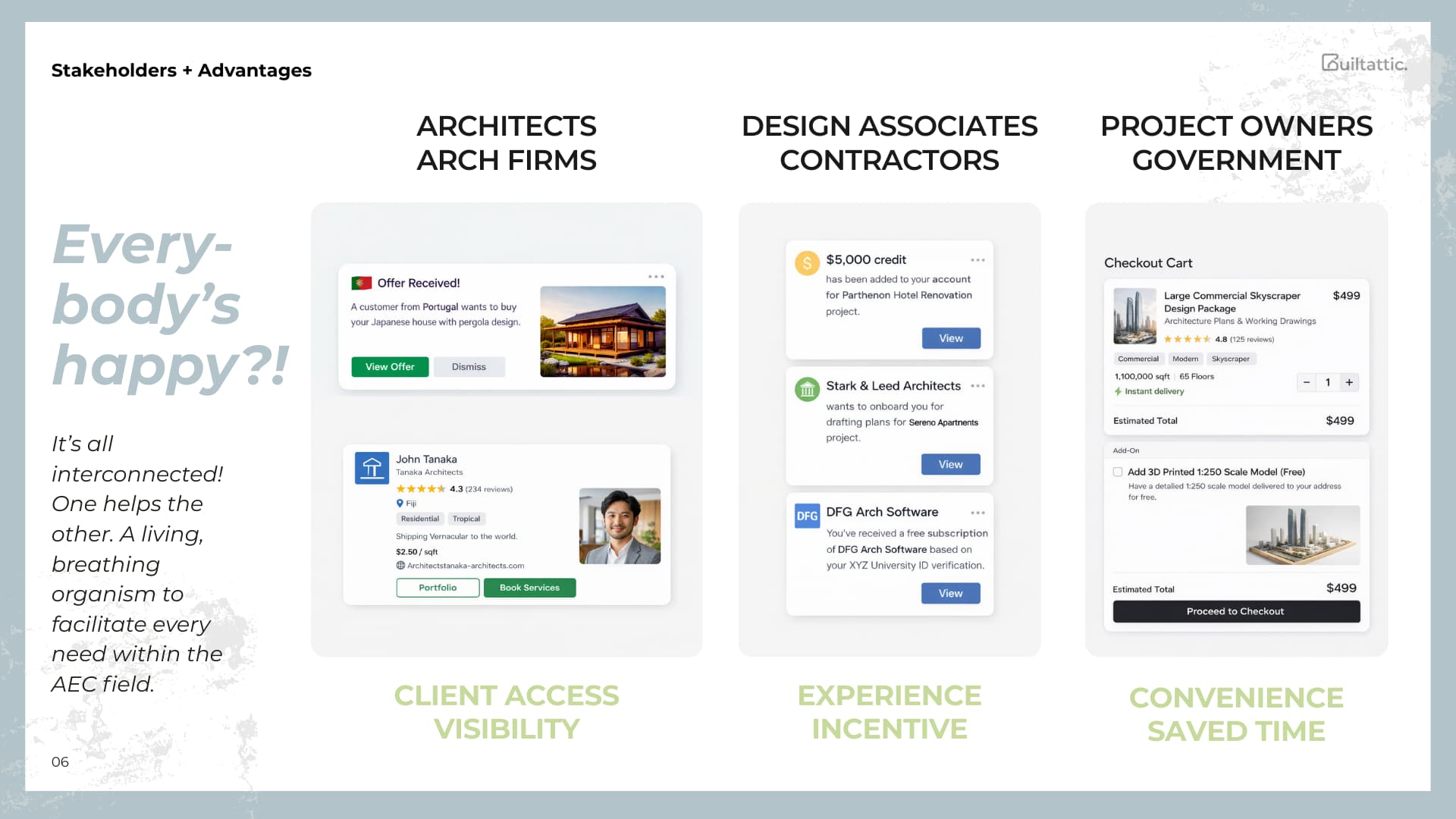
Secondary beneficiaries include developers, contractors, and individual builders who gain access to authenticated, constructible designs instead of inspiration-only content.
How does the project serve the Foundation’s mission of user-owned data?
The project enforces creator-owned data by default. Working drawings are never public, never indexed, and never accessible without explicit, purchase-triggered permission. Access is encrypted, attributable, and verifiable, ensuring architects retain control over who can access their data, when, and under what conditions.
Decentralized storage is used as infrastructure, not as a user-facing abstraction.
Compliance
Are you a resident of any jurisdiction on that list?
No
Will your payment bank account be located in any jurisdiction on that list?
No
Grant Specifics
Amount of money requested
USD 10,000
Justification and Breakdown (3 Months)
Engineering: $4,167 (41.7%)
- Core platform and storage workflow development
- Secure upload, encryption, and Sia-based retrieval
- Permissioned access control and delivery logic
- Ongoing fixes and system stabilization
Onboarding & Testing: $3,267 (32.7%)
- Controlled onboarding of architecture firms and associates
- Testing with real, production-scale design files
- Reliability, performance, and failure-case validation
Documentation & Software: $1,567 (15.7%)
- Open-source code cleanup and refactoring
- Technical setup guides and developer documentation
- Architecture and usage documentation
Compliance & Contingencies: $1,000 (10.0%)
- Grant reporting and milestone tracking
- Legal and administrative requirements
- Execution contingencies during pilot delivery
Budget Allocation (3 Months)
- Engineering: $4,167 (41.7%)
- Onboarding & Testing: $3,267 (32.7%)
- Documentation & Software: $1,567 (15.7%)
- Compliance & Contingencies: $1,000 (10.0%)
Total: $10,000 (100%)
Explicitly Out of Scope
- Marketing or promotion
- Hardware or physical infrastructure
- Team expansion
- Non-Sia integrations
Expected Outcomes
Qualitative
- Sia-backed secure delivery MVP live
- Successful storage and retrieval of real architectural design datasets
- Active onboarding and paid usage from early architecture partners
- Open-source codebase and technical documentation
- Clear validation for post-pilot expansion and follow-on funding
Quantitative
- $8–10K gross sales value (GSV)
- $2–3K projected net revenue from early marketplace and subscriptions
- 250+ subscriptions sold (AI + construction management)
- 3–5 countries entered to validate cross-border digital sales
- ~$30–40 customer acquisition cost during pilot phase
Payment method:
USD via ACH or wire (as required)
Timeline with measurable objectives and goals
Project Milestones (3 Months)
The pilot is structured as a 3-month execution cycle with clear milestones, focused on SMB supply onboarding and Tier III–V demand validation.
Milestone 1: Infrastructure & SMB Onboarding Setup
Timeline: Month 1
Strategy Focus:
- Supply: SMB architecture firms in Tier I–II cities
- Demand: Customers in Tier III–V cities seeking affordable, ready solutions
Objectives:
- Finalize core platform infrastructure
- Deploy secure storage and delivery workflows
- Prepare onboarding flows for firms, associates, and students
Key Outcomes:
- Marketplace, AI tool, and management tool live in pilot mode
- 45+ architecture firms and 45+ associates onboarded
- Initial subscriptions activated (AI + construction management)
- Platform ready for first paid transactions
Milestone 2: Initial Traction & Validation
Timeline: Month 2
Strategy Focus:
- Convert early SMB supply into paid usage
- Validate demand from Tier III–V buyers
Objectives:
- Begin paid sales and subscriptions
- Track usage, conversion, and CAC
- Expand footprint beyond initial cities
Key Outcomes:
- 30+ paid marketplace users
- 100+ total subscriptions across AI and management tools
- Presence across 2–4 countries
- ~$2.5K in combined subscription and marketplace revenue
- Measurable engagement and retention metrics
Milestone 3: Scale Signals & Post-Pilot Readiness
Timeline: Month 3
Strategy Focus:
- Strengthen SMB repeat usage
- Prove cross-border demand and scalability
Objectives:
- Achieve full pilot targets
- Prepare for post-pilot fundraising and expansion
Key Outcomes:
- ~$8K+ GSV generated during pilot
- Remaining Subscription + Sale Targets met
- Stable marketplace with AI wrapper (v1)
- Validated CAC (~$30) and unit economics
- Presence in up to ~5 countries
- Clear readiness for a $0.5M seed round for R&D, expansion, and global GTM
Evaluation Criteria
Each milestone is verified through:
- Live product functionality
- Paid usage and subscriptions
- Revenue and GMV
- Geographic and user footprint
Potential risks that will affect the outcome of the project
- Slower onboarding due to trust requirements in IP-sensitive domains
- Higher initial manual effort for seller validation
- Adoption friction in conservative architecture markets
These risks are mitigated through manual early onboarding, templatization, and pilot-first execution.
Development Information
Will all of your project’s code be open-source?
Yes.
All grant-supported code will be released under an OSI-compliant open-source license (MIT).
Closed-source components:
None. Third-party services may be used, but no closed-source code will be developed under this grant.
Code access:
Repositories will be publicly accessible and maintained throughout the grant period.
Links:
-
Unified Platform - Working Prototype
GitHub - akshat-chv/Builtattic-Unified · GitHub
(Check the shopify parallel on www.builtattic.com) -
Filecoin Application in Project - Working Prototype
GitHub - akshat-chv/filecoin-ArchIP-Security: Decentralized IP protection layer built on Filecoin for storing, time-stamping, and verifying ownership of digital assets. Enables creators and platforms to securely publish, sell, and prove authorship of files without exposing raw IP. Designed for marketplaces, creator economies, and enterprise IP workflows. · GitHub -
Construction Management Tool - Working Prototype
GitHub - akshat-chv/Builtattic-ConstructionManagement · GitHub -
AI Conceptualization Tool - Working Prototype
(Hosted at: www.builtattic.in)
(Access Code - 0ai2wtQ9)
Reporting
Do you agree to submit monthly progress reports?
Yes.
Progress reports will be submitted monthly in the forum.
Contact Info
Email:
[email protected]
Other contact methods:
LinkedIn: /in/akshat-cv/
GitHub: /akshat-chv